Creating a planner for a quilting retreat from scratch can sound simple at first. You come up with an idea, make a cover, add a few useful pages, and turn it into a finished product.
In reality, there is often much more involved.
You need to decide what the customer will need before, during, and after the event. You have to organize the pages in a logical order, make sure important details are not overlooked, and create enough content for the planner to feel complete.
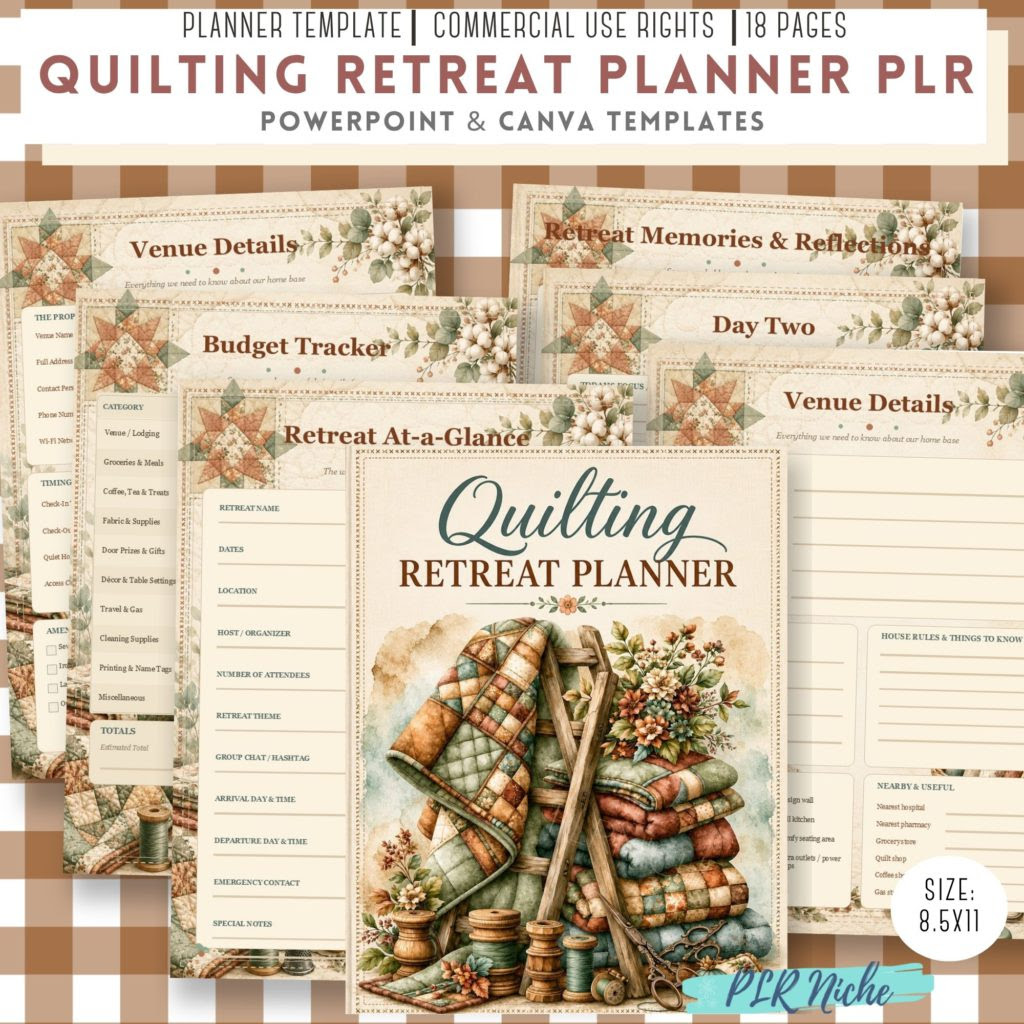
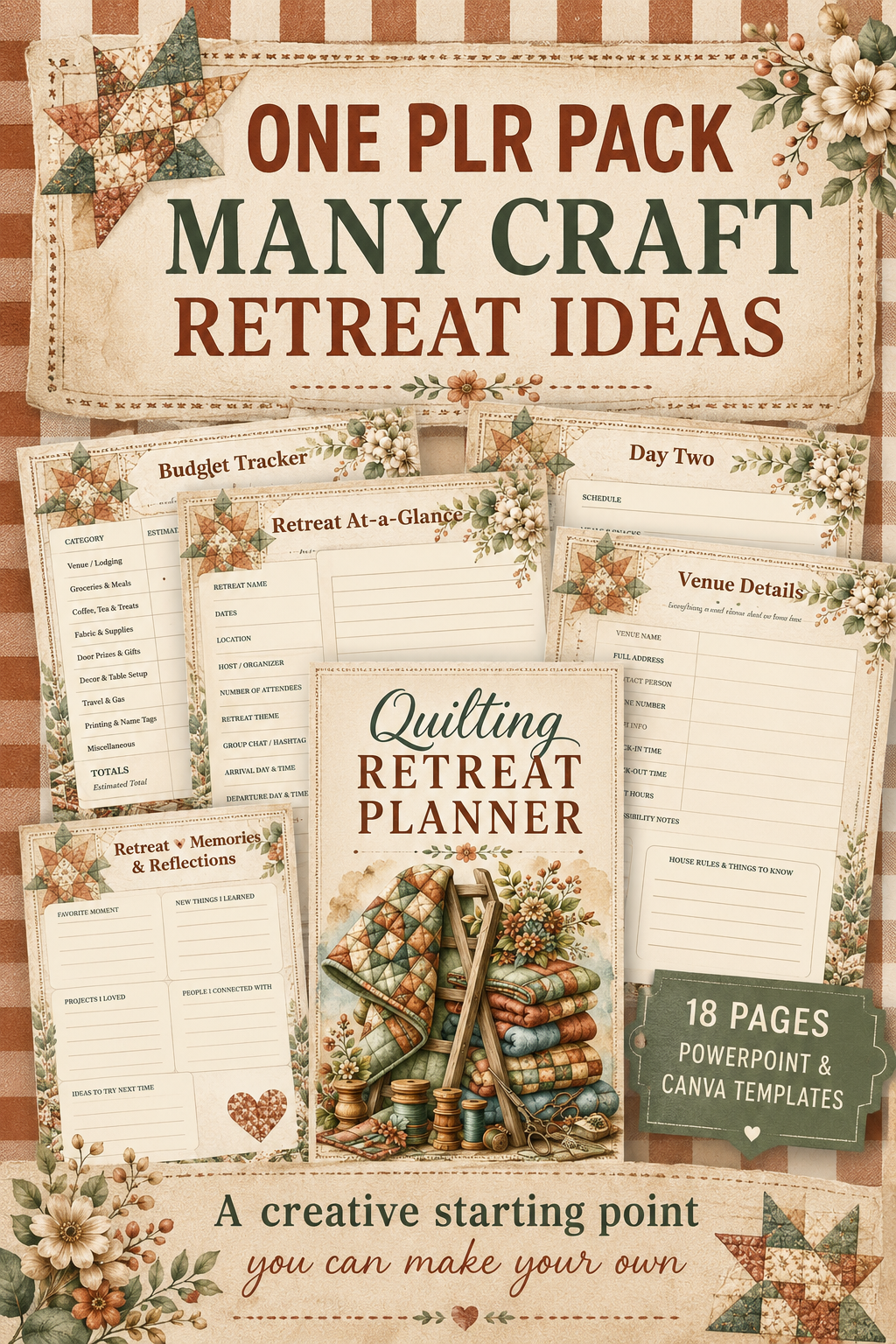
That Quilting Retreat Planner PLR pack from PLR Niche gives you a ready-made framework that you can customize, rebrand, expand, and turn into a product of your own. It removes much of the early planning work while still giving you plenty of room to be creative.
It can also be much more than a quilting planner. With a few thoughtful changes, the same pack can become the starting point for a variety of craft-themed retreat products.
Why a Retreat Planner Makes a Useful Product
Craft retreats are designed to be enjoyable, but they still involve quite a bit of organization.
Someone needs to keep track of the venue, attendee information, travel plans, meals, supplies, schedules, budgets, and projects. Retreat participants may also want a place to record goals, plan what they want to work on, and save their memories afterward.
A retreat planner brings all of those details together.
That makes it useful for retreat organizers, instructors, craft groups, and individual attendees. It could be offered as a printable planner, a digital download, a workbook for an organized event, or a physical book.
The Quilting Retreat Planner PLR pack already includes pages that cover the main stages of planning and attending a retreat.
These include:
- Two cover options
- Retreat At-a-Glance
- Vision and Goals
- Attendee Roster
- Budget Tracker
- Venue Details
- Travel and Arrival
- Meal Planning
- Shopping and Grocery List
- Daily planning pages
- Quilting project pages
- Sewing supply checklists
- Fabric and notions inventory
- Show and Tell and Retreat Fun
- Retreat Memories and Reflections
Instead of trying to layout all of those sections yourself, you can begin with an organized structure and focus on turning it into a product that fits your audience.
This is not simply a finished planner that you promote to someone attending a quilting retreat.
It is a pack of PLR templates created for product creators.
PLR, or private label rights, generally gives you permission to edit and customize the content according to the terms of the license. You can make changes to the wording, design, layout, and branding before turning it into a finished product.
Ways to Customize the Quilting Retreat Planner
The easiest changes are often visual.
You can update the colors, fonts, graphics, and page style to match your brand or a particular type of customer. One version could have a traditional patchwork look, while another could use clean modern colors and minimal graphics.
You could also create a fun and playful version for casual quilting groups or a more polished version for professional retreat organizers.
However, customization does not need to stop with the design.
You can rewrite page titles, add instructions, expand the planning sections, or include new pages that make the planner more useful.
For example, you might add:
- Room assignment pages
- Emergency contact information
- Workshop schedules
- Instructor information
- Quilt challenge planning
- Block swap details
- Fabric exchange lists
- Vendor shopping plans
- Machine maintenance checklists
- Photo pages
- Notes for planning the next retreat
You could also create several versions of the planner for different types of retreats.
A short weekend retreat may only need two or three daily schedule pages. A longer event may need more detailed planning, multiple workshop pages, and extra meal-planning sections.
Because you are starting with editable PLR, you can shape the final product around a specific customer rather than trying to make one planner work for everyone.

Turn It Into Other Craft Retreat Planners
One of the biggest advantages of this pack is that many of the pages are not limited to quilting.
The attendee roster, budget tracker, venue details, travel plans, meal planner, shopping list, daily schedules, goals, and reflection pages could work for almost any kind of creative retreat.
The main changes would be to the craft-specific project, inventory, and supply pages.
That makes the pack a strong starting point for several other products.
Crochet Retreat Planner
For a crochet version, you could replace the quilting pages with crochet project plans, yarn inventory pages, hook checklists, pattern trackers, and work-in-progress notes.
You might also add a yarn swap page, a list of techniques to practice, or a place to record pattern changes.
Scrapbooking Retreat Planner
A scrapbooking retreat planner could include layout ideas, photo lists, paper and cardstock inventory, embellishment checklists, tool lists, and album planning pages.
The show-and-tell section could be adapted into a completed-layout gallery or a place to record favorite techniques learned during the retreat.
Cross-Stitch Retreat Planner
For cross-stitchers, you could create pages for project plans, thread inventory, fabric details, needle and hoop checklists, and progress tracking.
You could also include a page for recording pattern designers, fabric counts, and color conversions.
Painting Retreat Planner
A painting retreat version could include project sketches, canvas sizes, paint inventory, brush checklists, technique notes, and inspiration pages.
It could be designed for watercolor, acrylic, oil painting, or a general art retreat.
Card-Making Retreat Planner
A card-making planner might include project lists, stamp inventories, die-cutting supplies, paper checklists, color combinations, and recipient or occasion lists.
It could also include production goals for creators who attend retreats to build up their card inventory.
General Craft Weekend Planner
You could remove most of the quilting-specific language and create a planner for mixed craft groups.
This version could use general project-planning pages, supply lists, shared equipment pages, workshop schedules, and group activity plans.
That may be especially useful for retreats where attendees work on different hobbies.
Create More Than One Product From the Pack
You do not have to use the PLR to create only one full-size planner.
The content can also be broken into smaller products or used to create companion items.
For example, you could create:
- A retreat packing checklist
- A craft project planner
- A retreat budget workbook
- A meal-planning pack
- A travel and arrival organizer
- A retreat memory journal
- A supply inventory bundle
- A mini planner for weekend retreats
You could also build a larger product line around the original planner.
Matching retreat invitations, name tags, room assignment cards, workshop notes, thank-you cards, certificates, or retreat games could all complement the main product.
This is where a PLR pack can become especially useful. Instead of looking at it as one set of pages for one planner, you can treat it as the foundation for a collection of related products.
Make the Finished Product Your Own
PLR saves time, but the strongest finished products usually include more than a new cover.
Before you begin editing, decide exactly who the planner is for.
Is it for an organizer running a paid retreat? A group of friends planning a casual weekend? A quilting guild? An individual attendee trying to prepare for the event?
That decision should guide the wording, design, and extra pages you include.
You can also make the product more original by adding your own experience, tips, prompts, or planning suggestions.
A retreat organizer may appreciate detailed checklists and attendee management pages. An individual crafter may care more about packing, project goals, and memory pages.
The more clearly you define the audience, the easier it becomes to turn the PLR into a focused product.
It is also important to make the design consistent throughout the planner. Use matching fonts, colors, graphics, and page elements so the final product feels intentional rather than assembled from separate pieces.

A Faster Starting Point for Your Next Product
The Quilting Retreat Planner PLR pack gives you a useful starting point without locking you into a single finished product.
You can use it to create a quilting retreat planner, adapt it for another craft, divide it into smaller printable products, or expand it into a full retreat-planning collection.
The structure is already there. Your role is to decide who the product is for and how you can make it more useful, appealing, and unique.
For creators who enjoy working with craft niches, this kind of PLR offers a practical way to move from idea to finished product without having to build every page from the ground up.
You can take a closer look at the Quilting Retreat Planner PLR pack here: