Instead of starting with a completely blank page, you can begin with ready-made planners, journals, trackers, worksheets, checklists, workbooks, or other templates and customize them for your own audience.
That can save you hours – sometimes days -of work.
But there’s one important thing to remember:
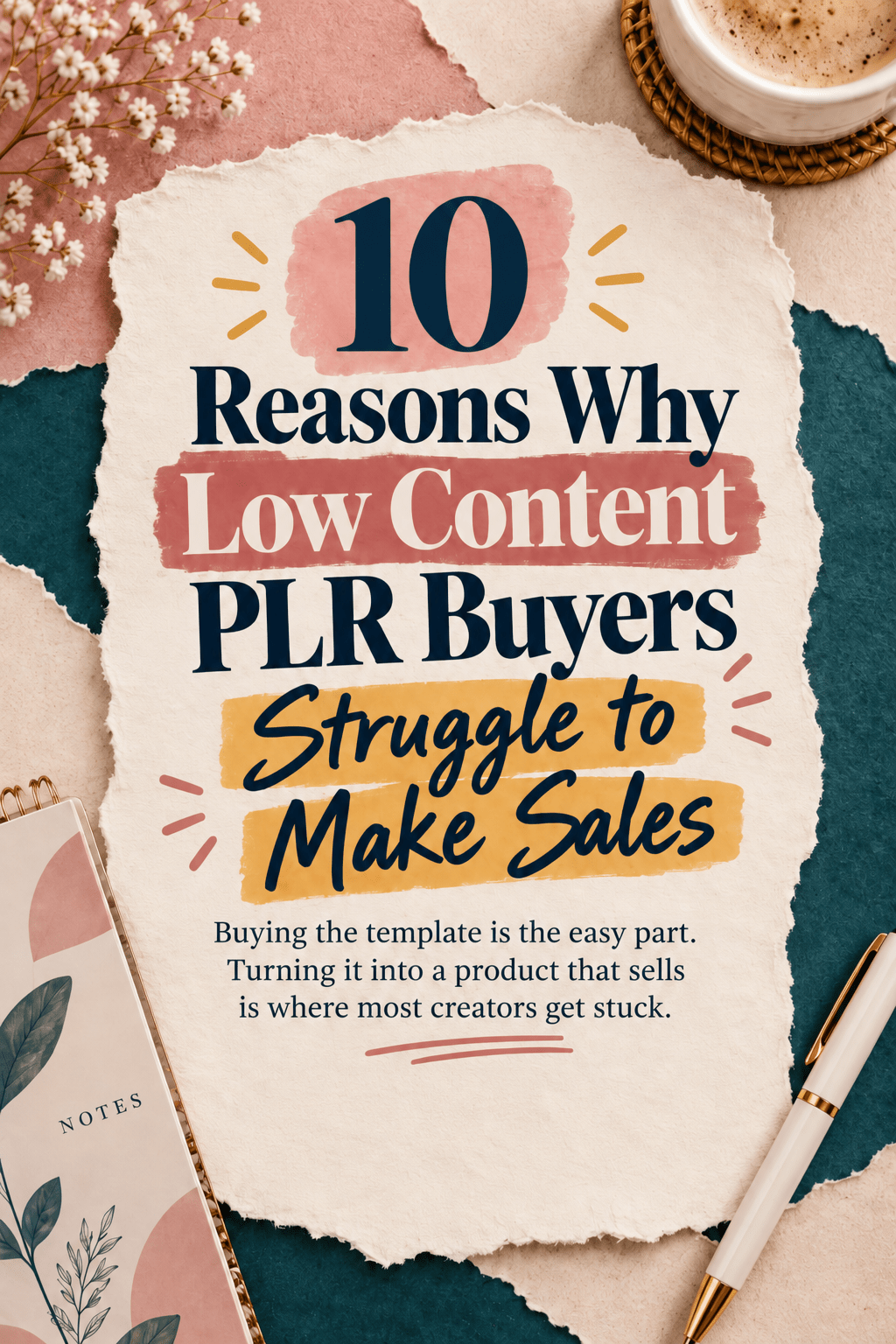
Buying a low-content PLR template is the easy part.
Turning that template into a product people actually want to buy takes a little more effort.
A beautiful planner sitting on your computer isn’t going to make you money. Neither will a journal interior you downloaded six months ago and never opened.
The real value of PLR comes from what you do with it.
You need to customize it, package it, position it for a specific buyer, create a strong listing, and then actually put it in front of people.
So why do so many people buy low-content PLR templates and still struggle to turn them into profitable products?
Here are 10 common reasons
1. You Expect the Template to Do All the Work
PLR makes product creation easier, but it doesn’t eliminate the work completely.
It can be tempting to download a template, change the cover, upload it somewhere, and expect the sales to start rolling in.
Sadly, it doesn’t usually work that way.
The template is your starting point.
You still need to decide who the product is for, how you’re going to customize it, what problem it solves, and why someone would choose your version instead of one of the many alternatives already available.
Instead of thinking: “I bought a planner template, so now I have a product.”
Think: “I bought a planner template, so now I have a head start on creating a product.”
That small mindset shift can make a big difference.
2. You Buy Too Much PLR and Finish Too Little
Buying PLR can become its own hobby – ask me how I know – lol.
You see a new bundle and immediately start thinking about all the products and at such a discounted price, and think of all the products you could create with it.
- A meal planner.
- A reading journal.
- A budget workbook.
- A holiday planner.
- A fitness tracker.
- A business planner.
Before long, you have hundreds of templates sitting on your hard drive and very few finished products.
More PLR does not automatically mean more income.
A single template that you customize, finish, list, and promote is worth far more than 100 templates you never use.
Before buying another bundle, take a look at what you already own.
There may already be several products waiting to be created – or templates that need to be deleted.
3. They Don’t Choose a Specific Audience
One of the biggest mistakes low-content creators make is creating products that are too general.
A generic planner has to compete with thousands of other generic planners.
But what if you turned that same basic template into:
- A meal planner for busy moms
- A budget planner for college students
- A reading journal for cozy mystery lovers
- A garden planner for beginner vegetable gardeners
- A Christmas gift planner for large families
- A homeschool planner for families with multiple children
Now the product feels more specific.
The buyer can immediately see that it was created with them in mind.
You don’t necessarily need a completely different PLR template for every niche.
Sometimes you simply need to take one flexible template and reposition it for a very specific audience.
4. They Barely Customize the PLR
Technically, your PLR license may allow you to make very few changes.
That doesn’t mean you should.
If dozens of buyers purchase the same template and everyone uploads nearly identical versions, none of those products are going to stand out very much.
Customization doesn’t have to mean redesigning every single page.
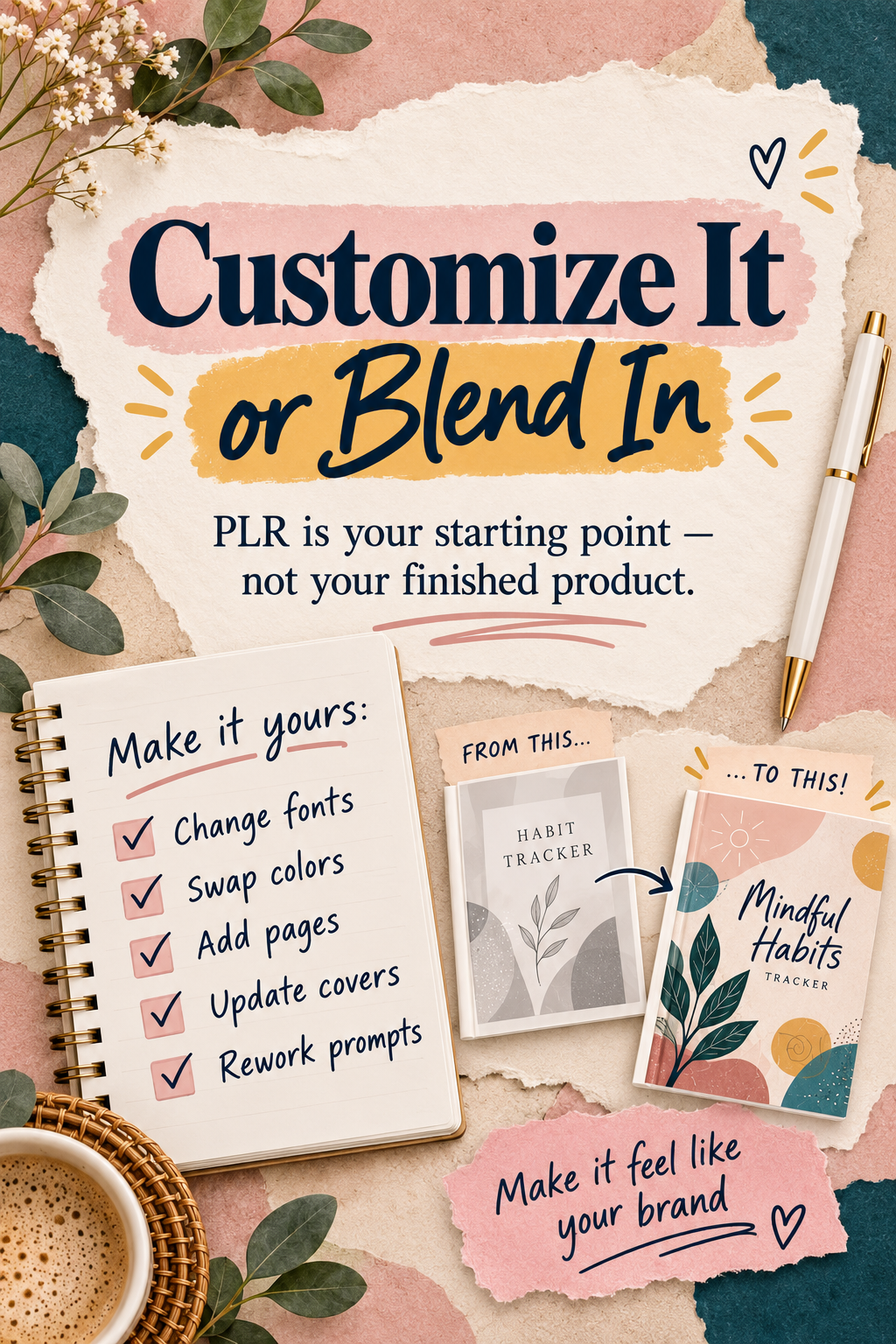
You can change things like:
- Fonts
- Colors
- Page order
- Section titles
- Instructions
- Decorative elements
- Covers
- Prompts
- Worksheets
- Bonus pages
You can also remove pages that don’t fit your audience and add new ones that make the product more useful.
The goal is to turn the original PLR into something that feels like your product, not simply someone else’s template with your name added to it.
5. They Add Pages Just to Make the Product Bigger
More pages do not always make a product better.
A 150-page planner isn’t automatically more valuable than a 40-page planner.
In fact, stuffing unnecessary pages into a product can make it harder to use.
Every page should have a reason for being there.
Ask yourself:
Does this page help the buyer accomplish what they purchased this product to do?
If the answer is no, you may not need it.
Instead of trying to create the biggest planner, workbook, or journal possible, try to create one that feels organized, useful, and easy to understand.
Useful beats huge.
6. They Ignore the Customer Experience
Creators sometimes spend so much time thinking about the design that they forget about the person who will actually use the product.
Open your finished template and pretend you are the customer.
Is it obvious where to begin?
Are the pages in a logical order?
Are the headings easy to understand?
Is there enough writing space?
Are the fonts readable?
Would instructions help?
Does the product feel overwhelming?
Small usability problems can make an otherwise attractive product frustrating.
If you are creating a printable, print a few pages yourself.
If you are creating a KDP interior, look at how the pages will appear when bound.
If you are creating a digital planner or workbook, test the actual file.
Design matters, but usability matters just as much.
7. Their Product Looks Like Everyone Else’s
Low-content markets can become repetitive very quickly.
Search for almost any popular planner or journal topic and you’ll probably see similar colors, similar covers, similar titles, and similar layouts.
That makes it difficult for buyers to tell one product from another.
You don’t need to create something bizarre just to be different.
You simply need to give the product some personality.
Maybe that means:
- A stronger theme
- A funnier title
- A more specific audience
- A unique page section
- A different visual style
- Better organization
- A useful bonus
- A more interesting cover
Even small changes can help your product feel less generic.
PLR gives you the framework.
Your job is to give it personality.
8. They Create the Product Before Checking Demand
It’s easy to fall in love with an idea.
Unfortunately, that doesn’t mean buyers are looking for it.
Before spending hours customizing a template, take a little time to research the market.
Look at the types of products already being sold.
Pay attention to:
- Common themes
- Product titles
- Customer reviews
- Questions buyers ask
- Features people praise
- Features people complain about
- Related search terms
- Seasonal demand
You are not trying to copy another seller.
You are trying to understand what customers actually want.
Sometimes a small amount of research can save you from spending days creating a product nobody was looking for in the first place.
9. You Stop After Publishing
Publishing the product can feel like the finish line.
Sadly, it isn’t. It’s the beginning of the marketing stage.
Whether you sell through your own website, Amazon KDP, Etsy, Gumroad, or another marketplace, you still need people to discover the product.
That might include:
- Blogging
- Email marketing
- Social media
- Search optimization
- Seasonal promotions
- Bundles
- Free samples
- Affiliate promotions
You do not need to use every marketing method at once – actually you shouldn’t try that it will drive you crazy – quickly.
Choose one or two that make sense for your business and work on them consistently.
A good product still needs visibility.
10. You Never Build on What Works
One of the biggest advantages of low-content PLR is that it makes it easier to create related products.
If one product starts selling, don’t immediately abandon it and chase a completely different niche. Instead, kook for ways to expand that product line.
If a Christmas gift planner sells well, perhaps you could create:
- A stocking stuffer planner
- A holiday budget planner
- A Christmas meal planner
- A holiday card tracker
- A Christmas shopping checklist
If a reading journal works, perhaps you could create versions for:
- Romance readers
- Mystery readers
- Fantasy readers
- Book clubs
- Reading challenges
One successful idea can become the foundation for an entire product line.
You do not have to reinvent your business every time you create something new.
Customize It or Blend In
Low-content PLR templates can save an enormous amount of time.
They can help you skip the blank-page stage, give you ideas for products, and make it possible to build a larger catalog much faster than creating every page from scratch.
But the template itself is only the beginning.
The real opportunity comes from taking that starting point and turning it into something useful, specific, and appealing to the right customer.
So instead of collecting more templates, start looking at the PLR you already own.
- Choose one.
- Customize it.
- Finish it.
- Publish it.
- Then promote it.
Because the PLR sitting on your hard drive isn’t the asset.
The finished product that you create is.